


What’s at Stake in WHO Pandemic Agreement Negotiations
The IGWG’s responsibilities include preparing the future Conference of the Parties, drafting the terms of reference for a Coordinating Financial Mechanism, and defining the structure and function of the proposed Global Supply Chain and Logistics (GSCL) network. The biggest task ahead, however, is completing the Pathogen Access and Benefit-Sharing (PABS) Annex (Article 12 of the Agreement).
Designated as the IGWG’s priority item, PABS is described as one of the most complex and contentious components of the Agreement. As one African Group statement put it, Article 12 is the “backbone” of the entire instrument.
The outcomes of these negotiations will be decisive in determining whether the Agreement’s equity commitments can be translated into practical outcomes or remain aspirational.
Key Issues on the Table
To meet the timeline for adoption of the Annex at the 79th World Health Assembly in May 2026, IGWG members must navigate several technical issues. The current Agreement leaves significant work ahead to turn key elements into workable provisions, including:
- defining scope (clarifying what qualifies as a “pathogen with pandemic potential”);
- obligations of industry (determining how binding and broad commitments from “participating manufacturers” should be);
- benefit-sharing mechanisms (deciding what constitutes fair benefit-sharing, not only in terms of equitable product distribution, but also potentially capacity-building, technology transfer, or licensing, among others);
- data and sample traceability (designing systems to trace not only physical samples but also digital sequence data)
These technical issues are not only complex but also politically and technically contentious.
A Test of Unity
One of the key challenges heading into the IGWG is political unity, or the lack of it. Taking traceability as an example, during the INB negotiations, most progressive countries supported including traceability as a core principle, while several high-income countries opposed it. More notably, some African delegates later aligned with an EU proposal that excluded traceability altogether, indicating cracks within previously unified blocs.
Such fragmentation could undermine the leverage that progressive countries, particularly those within the African Group and Equity Group, have built. A recent study shows that coordinated Global South positions during the INB process led to concrete progress on issues like technology transfer and the initial framing of PABS. These collective efforts also have not prevented countries from pursuing national priorities while upholding a shared commitment to equity and solidarity.
Coordinating under a Tight Timeline
To maximise influence, progressive countries will need to remain coordinated. Regional and South-South cooperation platforms should be activated to propose a unified negotiating text and reinforce shared red lines and priorities.
Reaching consensus on technical issues will be challenging, particularly given the IGWG’s tight timeline. Countries should therefore mobilise internal consultations and plan for mid-negotiation coordination and preparatory meetings, for example, on the sidelines of official events such as WHO regional committees.
What Comes Next
The immediate next step is for countries to submit their proposals for the PABS Annex by 10 August. An informal IGWG meeting is planned for 12 September, followed by a formal session from 15-19 September.
The months ahead will be pivotal. The IGWG’s work on the PABS Annex will test not only political will but also countries’ capacity to compromise on technically sound and practical provisions under a tight schedule. In this phase, the engagement of legal and policy experts will be critical to translating principles into operational commitments.

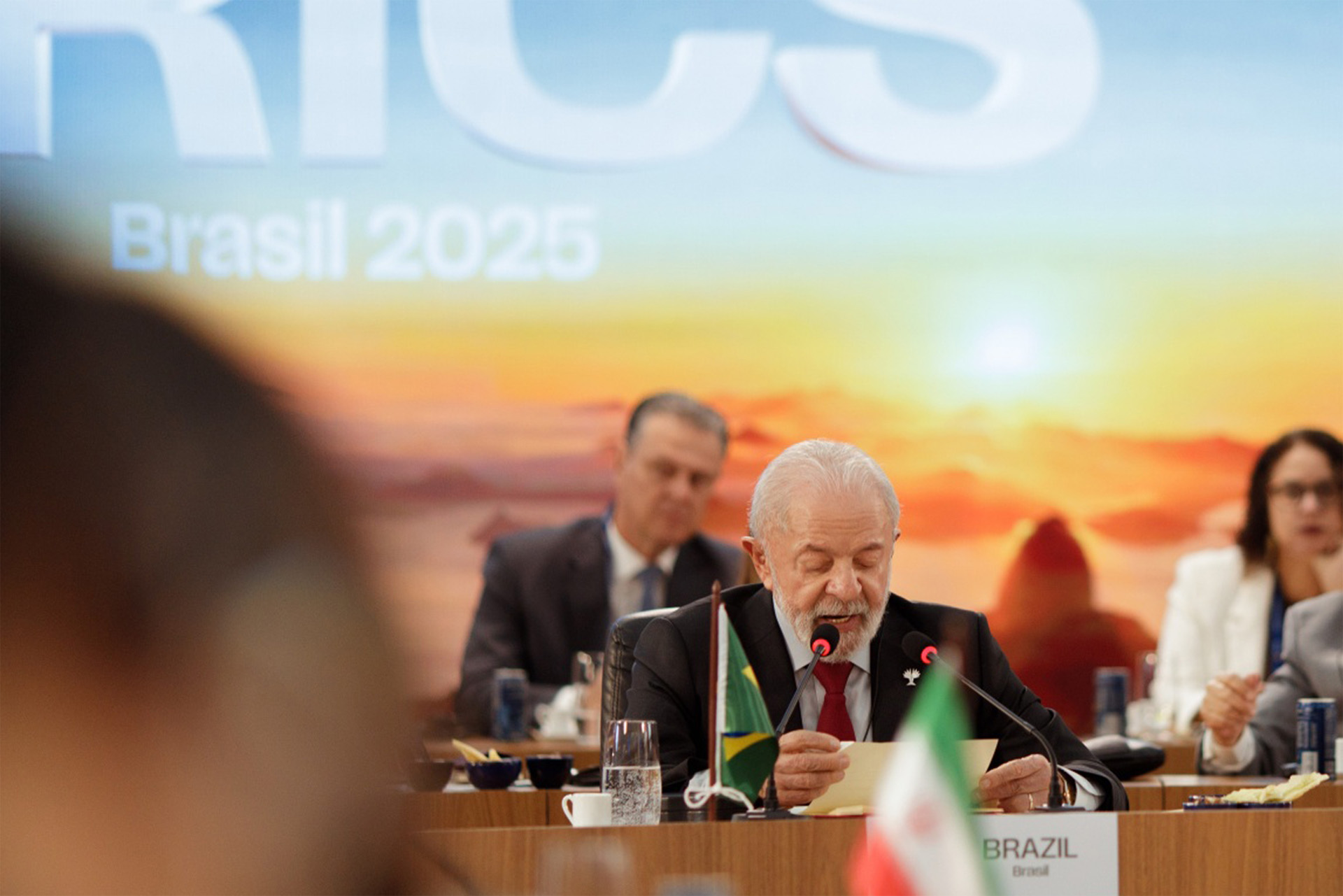
BRICS Summit Signals New Shifts in Global Governance
This weekend, BRICS leaders will gather to discuss this year’s summit theme, ‘Strengthening Global South Cooperation for More Inclusive and Sustainable Governance’. While blue skies are expected in Rio de Janeiro’s ever-sunny, 30-degree Celsius winter, a dark cloud hangs over the bloc’s negotiators behind closed doors.
The geopolitical outlook is stark, and may well make for uncomfortable tension in the meeting room: Russian President Putin will be joining online, as he cannot set foot in a country bound by the ICC without risking arrest 1; the conflict in the Gulf has countries taking sides, with strong statements from some bloc members like Brazil decrying unprovoked hostilities on the part of Israel, while India and Ethiopia have taken a more cautious stance, choosing not to point fingers at either Israel or the U.S. 2; discussions on trade and investment, one of this year’s priority themes, are unfolding against the backdrop of US President Trump’s blanket tariffs on the majority of the world (and most BRICS members) and direct threats of retaliation should BRICS members move forward with creating their own currency for international transactions 3.
There’s no crystal-clear prediction for how negotiations will unfold: on one hand, optimistic observers view the summit as a rare opportunity for geopolitically strategic countries to take the lead in reshaping - or even rebuilding - multilateralism 4. One thing is certain: while the world order as we knew it in the early 2000s is long gone, this is not the end of multilateralism altogether. Washington should not be the default power that states turn to in order to resolve their disputes bilaterally, as we saw during the escalation of tensions in the Middle East. The interconnected crises we are facing demand a shared, coordinated response, as threats know no borders. A strong bloc, composed of major powers willing to roll up their sleeves and propose an effective roadmap that prioritises democracy and equality over the unchecked imperial power of a few, is essential to revive meaningful hopes for multilateralism
Sceptics, on the other hand, argue that the bloc’s ability to move beyond rhetoric is seriously limited by internal divisions and the challenges of reaching consensus in an increasingly diverse forum 5. The group’s list of partner nations is nearly as long as its current cohort of member states. Bolivia, Kazakhstan, Cuba, Malaysia, Nigeria, Thailand, Uganda, Uzbekistan, and more recently Vietnam, are affiliated with BRICS in an observer role due to their purportedly shared vision of the global order. However, with some struggling to enforce the rule of law and uphold human rights, and others hesitant to support a green transition in sensitive industries, moving forward as a cohesive unit may be more difficult than ever 6.
An outlook on world politics in the lead up to the BRICS Summit
The BRICS Summit is organised around two distinct phases. Between the 30th of June and the 4th of July, the bloc's high-level envoys leading the negotiations, the sherpas, will convene to craft a common declaration on three topics: climate financing, socially determined diseases, and artificial intelligence governance. During the Leaders' Summit, taking place from the 6th to the 7th of July, the leaders of all 11 nations represented by the bloc, which includes Brazil, Russia, India, China, South Africa, Saudi Arabia, Egypt, UAE, Ethiopia, Indonesia, and Iran will convene in South America for the first time since seismic changes disrupted an already decaying world order. On this occasion, they will commit to the declarations previously drafted by the sherpas.
In the contemporary era of polycrisis, the climate emergency exacerbates economic instability, which in turn increases the likelihood of democratic erosion, leading to political instability. All BRICS countries face, to different degrees and extents, these interconnected crises, which can only be addressed through strong international coordination. The crumbling international order’s former great powers are discredited for lacking the authority to lead the way forward. The so-called Global North is fractured between an isolationist America and a generally globalist Europe. Once joint protagonists of the international system, these nations - and the institutions they shaped in their image and likeness – are now viewed with dismay by much of the world, who have borne the brunt of austerity measures and the financialisation of life imposed by the Bretton Woods architecture. In this vacuum, coalitions from the Global South are gaining momentum to lead the way forward, fostering alternative coordination among themselves to counter systemic imbalances.
Groupings aiming to offer an alternative to the G7’s political and economic influence are neither new nor rare in international relations. What sets the BRICS+ bloc apart is that it is too big of an elephant in the room to ignore 7: it comprises 48% of the world’s population and represents 36% of the world’s surface.. IMF data show the group is surpassing the developed G7 economies in relevance, representing 40% of the global economy, compared to 28% for the EU and North America combined. Additionally, BRICS+ economies account for a significant 24% of global trade, and while most countries endure stagnation or economic decline, all BRICS economies have grown in recent years, with rates ranging from 1.1% to 6.6%. In regard to natural resources, fundamental for industrialisation and energy production, the figures are equally impressive: BRICS members possess 72% of the world's reserves of rare earth minerals, 43.6% of global oil, 35% of global natural gas and outstanding 78.2% of global hard coal production. The material, intellectual, cultural, and political resources BRICS countries can leverage attest for their growing relevance in pushing for a new world order.
What’s on the agenda?
Under the Brazilian presidency, six priority themes are on the agenda: global health, trade and investment, climate change, artificial intelligence governance, multilateralism architecture for peace and secure, and strengthening the BRICS institutional framework. Widely recognised for its health governance, Brazil has pushed for the prioritisation of the social determinants of health as a key issue.
The Brazilian National Health System (SUS) is a flagship initiative that has played an important role in promoting and democratising access to free health care even in the most remote areas of the country’s vast territory. In this vein, the country's diplomacy is working to highlight how poverty, inequity, and race and gender disparities exacerbate poor health outcomes for marginalised populations. A global agreement to eliminate socially determined diseases is the most likely outcome of the conference, and strengthening R&D and vaccine manufacturing within the group is paramount to this effort.
Another aspect afforded central relevance in Brazil-led health discussions is global health governance - specifically, how to ensure that data is ethically collected and responsibly shared among members to enable medical advancement while countering the putative greed of Big Pharma at the expense of the public good. As nations discuss the PABS annex of the Pandemic Treaty, which calls for shared responsibilities and timely and equitable distribution of benefits, having such a strong Global South may signal that the relentless pursuit of profit by developed nations could face coordinated resistance from BRICS, in line with the bloc’s commitment to, put simply, ensure that those who cannot pay, still have equal access to treatment and care, and the protection of their right to health.
Regarding efforts to advance a practical agenda for multilateral architecture, there are high expectations that Brazil and India will reaffirm their pledge to seek permanent seats on the UN Security Council. However, other countries within the bloc - those that do not envision such a post - may hold opposing views that question the very existence of this “world police”. Also, while China joins Brazil in calling for reforms to the IMF, it remains resistant to the addition of either Brazil or India to the UN Security Council - highlighting once again the limitations and inconsistencies in the scope of institutional reforms each BRICS member is truly willing to support 8.
On trade and investment, BRICS’ main institutional achievement, the New Development Bank - originally created as an alternative to the World Bank - is expected to be followed by other innovations in global governance. First, de-dollarisation may return to the table. With Mr. President Trump’s volatility and unpredictability threatening confidence in the dollar and stock markets, BRICS members are likely to resume conversations about conducting transactions in a common, hassle-free (or at least hassle-reduced) currency. Russia, currently excluded from the SWIFT transaction system, is expected to push this agenda more forcefully. Second, the creation of a BRICS grain exchange platform is much awaited by those who believe in the more revolutionary aspect of the group. It aims to facilitate transactions among producers, exporters, and importers, ensuring food security amid the climate crisis. The possibility of establishing a BRICS Reserve Bank to play a role like that of the IMF has also surfaced in recent meetings, although it remains under discussion among the group’s members.
Conclusion
Back in 2011, the creation of BRICS was seen as a groundbreaking counterweight to the G7 and other Western-led groupings for it represented Global South aspirations. Twenty years later, the bloc has taken baby steps toward revolutionising the global order and its structures—but it has played an important role in reshaping some of them. The outcomes of the Leaders’ Summit, member countries’ willingness to be “active and assertive,” in the words of former Brazilian Foreign Minister Celso Amorim, may indeed shape how economies and societies are organised in the years ahead—especially if they push harder for genuine multilateral reforms and more democratic global institution.
References
- Dickinson, P. (2024, July 1). Putin cannot attend BRICS summit in Brazil as he fears arrest for war crimes. Atlantic Council. https://www.atlanticcouncil.org/blogs/ukrainealert/putin-cannot-attend-brics-summit-in-brazil-as-he-fears-arrest-for-war-crimes/
- Armijo, L. E. (2025, July 1). Brazil’s BRICS agenda may be hard to accomplish after Iran-Israel war. Chatham House. https://www.chathamhouse.org/2025/07/brazils-brics-agenda-may-be-hard-accomplish-after-iran-israel-war
- Reuters. (2025, January 31). Trump repeats tariffs threat to dissuade BRICS nations from replacing US dollar. https://www.reuters.com/markets/currencies/trump-repeats-tariffs-threat-dissuade-brics-nations-replacing-us-dollar-2025-01-31/
- Camargo, R. C. (2024). A importância da participação brasileira no BRICS: Uma análise de política externa. Revista CEBRI, 7(2), 74–89. https://cebri-revista.emnuvens.com.br/revista/article/view/256/386
- Ribeiro, D. (2023, julho 10). Ampliar o Brics não é bom para o Brasil, diz analista político. O Globo. https://oglobo.globo.com/mundo/noticia/2023/07/10/ampliar-o-brics-nao-e-bom-para-o-brasil-diz-analista-politico.ghtml
- Carnegie Endowment for International Peace. (2025, March). BRICS expansion and the future of world order: Perspectives from member states, partners, and aspirants. https://carnegieendowment.org/research/2025/03/brics-expansion-and-the-future-of-world-order-perspectives-from-member-states-partners-and-aspirants?lang=en
- BRICS. (n.d.). Dados sobre o BRICS. BRICS Brasil. https://brics.br/pt-br/sobre-o-brics/dados-sobre-o-brics
- Stuenkel, O. (2019). Rising powers and global governance: Dissecting the dynamics between Brazil and China. CEBRI. https://cebri.org/revista/en/artigo/34/rising-powers-and-global-governance-dissecting-the-dynamics-between-brazil-and-china